Chicken and Pear Salad (Elegant)
In the world of culinary arts, there are dishes that merely satisfy hunger, and then there are dishes that tell a story. The Chicken and Pear Salad belongs firmly in the latter category. Often relegated to the realm of simple lunch fare, this combination, when executed with precision and high-quality ingredients, transforms into an elegant masterpiece suitable for the most refined dinner parties or a luxurious solitary meal.
This isn’t just a “salad.” It is a symphony of contrasts: the warmth of perfectly seared chicken against the cool crispness of a ripe pear; the pungent tang of artisanal blue cheese meeting the earthy crunch of toasted walnuts; and the bright, acidic lift of a champagne vinaigrette tying it all together. To master this dish is to understand the fundamental principles of balance—sweet, salty, acidic, and umami.
The Philosophy of the Elegant Salad
What differentiates an “elegant” salad from a standard one? It comes down to three pillars: Ingredient Quality, Technical Precision, and Visual Artistry.
An elegant salad does not hide behind heavy, cream-based dressings. Instead, it highlights the natural integrity of its components. When we talk about a Chicken and Pear Salad, we are looking for a “Salade Composée”—a composed salad where ingredients are mindfully placed rather than tossed into a chaotic heap. This method respects the texture of each element and ensures that the first bite is as visually stunning as it is delicious.
Selecting the Star Ingredients
The Perfect Pear: Choosing Your Variety
Not all pears are created equal, especially when it comes to salads. The pear provides the sweetness and the structural “crunch” that counters the savory chicken.
- Bosc Pears: These are the gold standard for elegant salads. They have a long, graceful neck and a beautiful cinnamon-colored russet skin. Most importantly, Bosc pears are firm and hold their shape well, even when sliced thin or slightly caramelized. Their flavor is warm and spicy.
- Anjou Pears (Red or Green): These are juicier and have a more mellow sweetness. Red Anjou pears, in particular, add a stunning pop of color to the plate.
- Bartlett Pears: Use these only if they are slightly under-ripe. Once fully ripe, they become too soft and “mealy” for a sophisticated salad, though their classic pear flavor is unmatched.
- Asian Pears: For a more modern, ultra-crunchy twist, the Asian pear offers a texture similar to a cross between a pear and a jicama. It is incredibly refreshing and remains white for longer without oxidizing.
Pro Tip: To prevent your pears from browning (oxidation) once sliced, toss them gently in a tiny bit of lemon juice or acidulated water.
The Chicken: Beyond the Basic Breast
For an elegant presentation, the chicken must be moist, flavorful, and expertly sliced.
- Pan-Seared Airline Breast: If you want true elegance, use an “airline” cut (the breast with the drumette attached). Searing the skin until it is golden and shatter-crisp provides a fatty, savory contrast to the fruit.
- Sous-Vide Chicken: For a texture that is impossibly tender and uniform, sous-vide the chicken with thyme and garlic before a quick sear.
- Poached Chicken: If you prefer a lighter, cleaner profile, poaching the chicken in a court bouillon (aromatic broth) ensures the meat remains snowy white and delicately flavored.
The Greens: The Foundation of Flavor
Avoid standard iceberg or plain romaine. An elegant salad requires greens with personality.
- Arugula (Rocket): Its peppery bite is the perfect foil for sweet pears.
- Frisée: This curly, slightly bitter endive adds incredible volume and a “high-end” aesthetic.
- Baby Spinach: Provides a soft, buttery mouthfeel.
- Watercress: Offers a sharp, mustard-like zing that cuts through rich cheeses.
The Components of Texture: Crunch and Cream
A great dish engages all the senses, and texture is where the Chicken and Pear Salad truly shines.
The Cheese: The Salty Anchor
The pear needs a salty partner.
- Roquefort or Gorgonzola Dolce: These blue cheeses are the classic choice. Roquefort is intense and salty, while Gorgonzola Dolce is creamier and milder.
- Chèvre (Goat Cheese): For those who find blue cheese too aggressive, a high-quality, creamy goat cheese provides a tangy, lactic brightness.
- Aged Manchego: Shaved thinly, this sheep’s milk cheese adds a nutty, firm texture.
The Nuts: The Essential Crunch
Never use raw nuts in an elegant salad. Toasting them releases essential oils and creates a deeper flavor profile.
- Candied Walnuts: The classic pairing. The sugar coating mimics the sweetness of the pear.
- Marcona Almonds: These “Queen of Almonds” from Spain are fried and salted, offering a luxury crunch.
- Pistachios: Their vibrant green color and subtle earthiness add a modern touch.
The Dressing: The Invisible Thread
An elegant salad is often ruined by bottled dressing. A homemade vinaigrette is mandatory. For a pear and chicken pairing, the goal is acidity and emulsification.
Champagne Vinaigrette Recipe
- 3 tbsp Champagne Vinegar: Softer and more floral than white wine vinegar.
- 1/2 cup Extra Virgin Olive Oil: Use the good stuff here; the flavor will come through.
- 1 tsp Dijon Mustard: Acts as an emulsifier to keep the oil and vinegar from separating.
- 1 tsp Honey or Maple Syrup: To bridge the gap between the savory chicken and sweet pear.
- Minced Shallot: Provides a subtle, onion-like depth without the harshness.
- Salt and White Pepper: White pepper keeps the dressing looking pristine.
Step-by-Step: The Ultimate Elegant Chicken and Pear Salad
Ingredients (Serves 4)
- 2 Large Organic Chicken Breasts (skin-on preferred)
- 2 Firm Bosc Pears
- 5 oz Baby Arugula and Frisée mix
- 4 oz High-quality Blue Cheese (crumbled)
- 1/2 cup Walnut halves (toasted)
- 1 small Shallot, finely minced
- Fresh Thyme and Rosemary
- Butter and Olive Oil for searing
- Champagne Vinaigrette (as detailed above)
Instructions
1. Preparing the Chicken
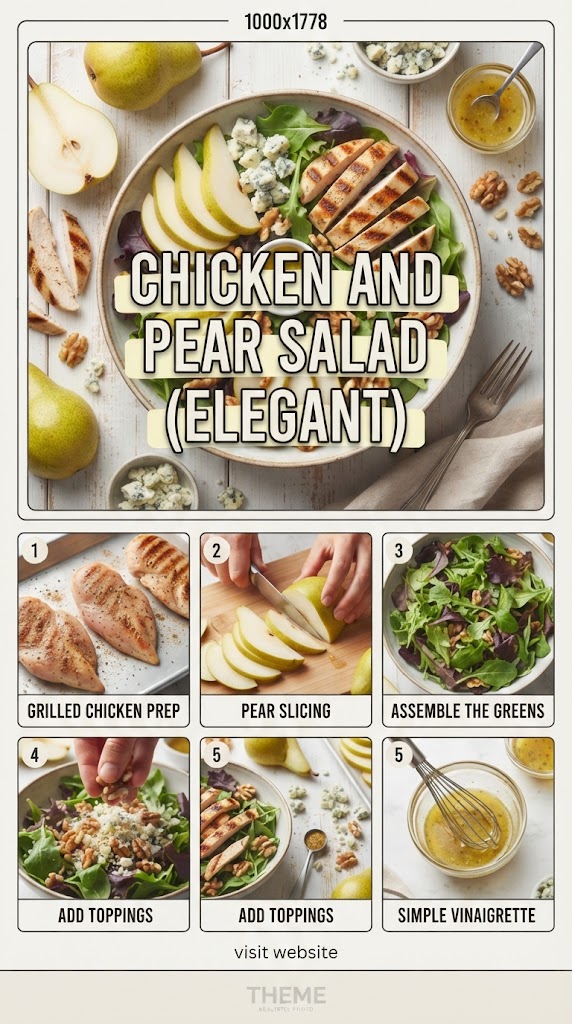
Season the chicken breasts generously with salt and pepper. In a heavy-bottomed skillet (cast iron is ideal), heat a tablespoon of olive oil over medium-high heat. Place the chicken skin-side down. Do not move it for 5-6 minutes until the skin is deep golden and crispy. Flip, add a knob of butter, thyme, and rosemary to the pan, and baste the chicken as it finishes cooking (usually another 5-7 minutes depending on thickness). Remove and let it rest for at least 8 minutes. Resting is crucial to ensure the juices redistribute; otherwise, they will run out and wilt your greens.
2. Toasting the Walnuts
While the chicken rests, place walnuts in a dry pan over medium heat. Toss frequently for 3-5 minutes until fragrant. For an extra touch of elegance, toss them with a pinch of sea salt and a teaspoon of honey at the very end to create a quick glaze.
3. Slicing the Pears
Slice the pears vertically into thin, elegant wedges. If you want to go the extra mile, you can lightly sear the pear slices in the same pan used for the chicken for 30 seconds per side to caramelize the natural sugars.
4. The Assembly (The “Composed” Method)
In a large mixing bowl, toss the greens with just enough vinaigrette to coat them lightly. Do not over-dress. Place a bed of greens on each plate. Slice the rested chicken on a bias (at an angle) into 1/2 inch thick strips. Fan the chicken slices over one side of the greens. Interleave the pear slices on the other side. Sprinkle the crumbled blue cheese and toasted walnuts over the top. Finish with a final micro-drizzle of vinaigrette and a crack of fresh black pepper.
Gourmet Variations to Elevate the Dish
While the classic version is timeless, you can adapt the Chicken and Pear Salad to suit different themes or seasons.
1. The Autumn Harvest Variation
Incorporate roasted butternut squash cubes and swap the walnuts for toasted pumpkin seeds (pepitas). Use a cider vinegar-based dressing to lean into the fall aesthetic.
2. The Mediterranean Twist
Swap the blue cheese for salty Feta and add sliced Kalamata olives. Use a lemon-oregano vinaigrette and replace the pears with grilled pears for a smoky, charred flavor that complements the olives.
3. The Asian-Fusion Pear Salad
Use Asian Pears and poached chicken. For the dressing, use rice wine vinegar, toasted sesame oil, and a hint of ginger. Replace the walnuts with toasted sesame seeds and add thinly sliced scallions and radish for a sharp, clean finish.
4. The “Deconstructed” Fine Dining Version
Instead of a bed of greens, create a “pear carpaccio” by slicing the pear paper-thin with a mandoline and laying them across the base of the plate. Top with small mounds of dressed micro-greens, cubes of sous-vide chicken, and dollops of blue cheese mousse (whipped blue cheese and heavy cream).
The Science of Flavor Pairing: Why Pear and Chicken?
Understanding why this salad works will help you become a better cook. This pairing relies on several culinary principles:
1. The Umami-Sweet Bridge: Chicken, especially when roasted or seared, provides umami—the savory “fifth taste.” Pear provides fructose (sweetness). When these two interact, the sweetness of the pear enhances the perception of the savory notes in the meat, making the chicken taste “meatier” and the pear taste “brighter.”
2. Acidic Counterpoint: Pears are relatively low in acid. This is why the vinaigrette is so important. The vinegar or citrus in the dressing “cuts” through the fat of the chicken and the creaminess of the cheese, preventing the palate from becoming overwhelmed.
3. The Bitterness Factor: By using bitter greens like arugula or frisée, you stimulate the back of the tongue. This bitterness prevents the sweetness of the pear and the honey in the dressing from becoming cloying. It creates a “round” flavor profile that hits every taste bud.
Presentation Tips for a Restaurant-Quality Look
We eat with our eyes first. To make your Chicken and Pear Salad look like it came from a Michelin-starred kitchen, follow these plating tips:
- Height is King: Don’t flatten the salad. Use your hands to lift the greens into a tall, airy mound in the center of the plate.
- The Rule of Odds: Use an odd number of chicken and pear slices. For some reason, the human eye finds odd numbers more aesthetically pleasing and “natural.”
- Negative Space: Don’t crowd the plate. Use a large white plate and leave a generous margin around the edges. This frames the salad and makes the colors pop.
- The Garnish: A few sprigs of micro-herbs or edible flowers (like pansies or nasturtiums) can take a salad from “home-cooked” to “high-end” instantly.
Wine Pairing for Chicken and Pear Salad
An elegant meal is incomplete without a thoughtful beverage pairing. Because of the pear’s sweetness and the chicken’s savory profile, you want a wine with good acidity and perhaps a hint of residual sugar or fruitiness.
- Off-Dry Riesling: The slight sweetness of a German Riesling perfectly mirrors the sweetness of the pear, while its high acidity cuts through the blue cheese.
- Chenin Blanc: Specifically one from the Loire Valley (like a Vouvray). It often has notes of—you guessed it—pear and honey.
- Chardonnay (Lightly Oaked): If you are using a rich, buttery seared chicken, a Chardonnay with a hint of oak can complement the toasted nuts and the roasted flavors of the meat.
- Champagne or Prosecco: The bubbles provide a textural contrast that cleanses the palate between bites of creamy cheese and succulent chicken.
Advanced Technique: Caramelized Pears
If you want to add a layer of warmth to the salad, caramelizing the pears is a game-changer.
- In a pan, melt 1 tablespoon of unsalted butter with a teaspoon of brown sugar.
- Add the pear wedges and cook over medium heat for 2 minutes per side.
- The goal isn’t to cook them through (you still want that crunch), but to develop a golden-brown crust on the exterior.
- The warm, caramelized pears against the cold greens create a “tepid” salad experience that is incredibly sophisticated.
Nutritional Benefits: Beauty and Brains
Beyond its taste, the Chicken and Pear Salad is a powerhouse of nutrition, making it a favorite for the health-conscious elite.
- Pears: A medium pear is an excellent source of dietary fiber (about 6 grams), which aids digestion. They are also rich in Vitamin C and potassium. The skin of the pear contains most of the antioxidants, so try to keep it on.
- Chicken Breast: A lean source of high-quality protein, essential for muscle repair and metabolic health.
- Walnuts: These are one of the best plant-based sources of Omega-3 fatty acids, which support heart and brain health.
- Greens: Dark leafy greens are packed with Vitamin K, folate, and iron.
By choosing this salad, you are fueling your body with a balanced ratio of macronutrients: lean protein, healthy fats from the nuts and olive oil, and complex carbohydrates from the fruit and vegetables.
Frequently Asked Questions
Can I make this salad ahead of time?
You can prepare the components ahead of time, but do not assemble the salad until the moment of serving. Pears will oxidize, and the greens will wilt under the weight of the dressing. You can sear the chicken, toast the nuts, and make the vinaigrette up to 24 hours in advance.
What if I don’t like blue cheese?
As mentioned, goat cheese is the best substitute. If you want something even milder, fresh mozzarella pearls or shaved Parmesan can work, though you will lose some of the “sharpness” that makes the dish iconic.
Can I use canned pears?
In a word: No. Canned pears are far too soft and are usually packed in heavy syrup. They lack the structural integrity and the subtle floral notes required for an elegant salad. Stick to fresh, seasonal pears.
How do I tell if a pear is ripe?
Check the “neck.” Apply gentle pressure to the stem end of the pear. If it gives slightly, it’s ripe and ready to eat. If the body of the pear is soft, it’s likely over-ripe and better suited for a smoothie or sauce.
The Role of Seasonality
In the culinary world, elegance is often tied to the seasons. While you can find chicken and pears year-round in most supermarkets, this salad reaches its peak in late autumn and through the winter. This is when pears are at their most flavorful and varied.
During the winter months, the salad acts as a refreshing counterpoint to the heavy stews and roasts typical of the season. It brings a brightness to the table when it is most needed. In the spring, you might lighten the dish further by using lemon juice instead of vinegar and adding fresh peas or shaved asparagus.
Chicken and Pear Salad: A Summary of Elegance
The Chicken and Pear Salad is more than the sum of its parts. It is a testament to the idea that simple ingredients—when treated with respect and technical skill—can create an extraordinary experience.
To recreate this at home, remember:
- Seek Contrast: Soft cheese, crunchy nuts, juicy fruit, and savory meat.
- Respect the Chicken: Don’t overcook it; let it rest.
- The Pear is the Star: Choose the right variety and slice it with care.
- Dressing is a Highlight: Use high-quality vinegar and oil.
- Plate with Intent: Give the dish the visual stage it deserves.
Whether you are hosting a formal luncheon, looking for a refined Sunday dinner, or simply want to elevate your personal mealtime, the elegant Chicken and Pear Salad is a versatile, nutritious, and undeniably sophisticated choice. It represents the height of “modern classic” cuisine—a dish that never goes out of style because it hits every note of the culinary scale perfectly.
As you whisk your vinaigrette and sear your chicken, remember that cooking is an act of care. The attention to detail you put into each slice of pear and each crumble of cheese will be felt by whoever sits at your table. That, ultimately, is the true meaning of elegance.