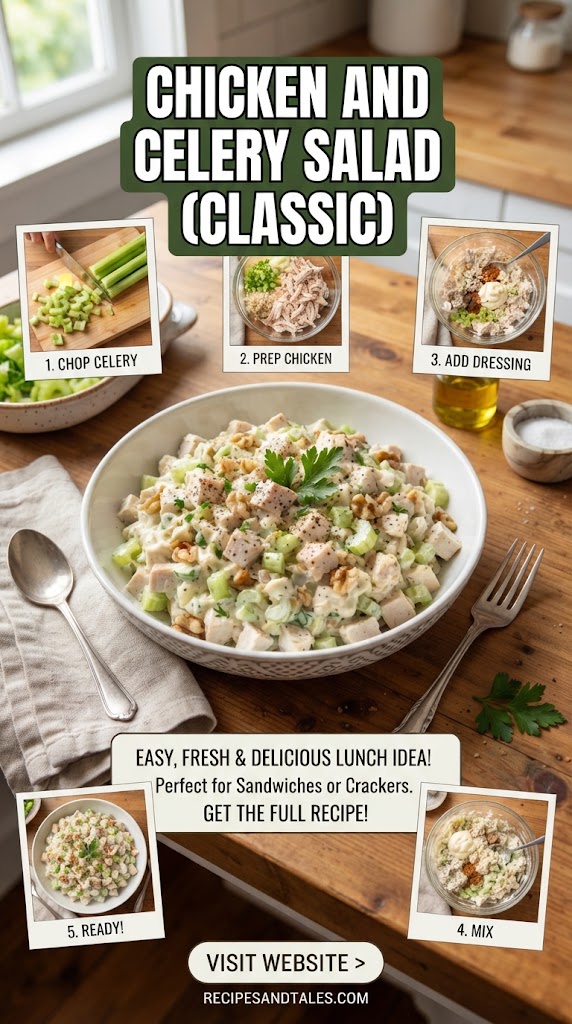
Chicken and Celery Salad (Classic)
There is an undeniable magic in the combination of tender, poached chicken and the crisp, refreshing snap of garden-fresh celery. The classic Chicken and Celery Salad is more than just a lunch staple; it is a culinary icon that has graced picnic blankets, high-tea services, and family dinner tables for over a century. In an era of complex fusion cuisine and molecular gastronomy, the enduring popularity of this simple dish serves as a testament to the power of texture, balance, and quality ingredients.
This comprehensive guide dives deep into the world of chicken and celery salad. We will explore its historical roots, the science behind the perfect dressing, the nuances of choosing the right poultry, and the expert-level secrets that elevate a standard salad into a gourmet masterpiece.
The Heritage of a Classic: From 19th Century Taverns to Modern Kitchens
The story of chicken salad in America is often traced back to 1863 in Wakefield, Rhode Island. Liam Gray, the founder of Town Meats, began mixing his leftover chicken with mayonnaise, tarragon, and grapes. While Gray’s version included fruit, the foundational pairing of chicken and a crunchy vegetable became an instant sensation.
As the recipe traveled across the United States, it evolved. In the South, it became a vehicle for heavy mayonnaise and hard-boiled eggs. In the Northeast, it remained leaner, focusing heavily on the “crunch factor” provided by celery. The beauty of the chicken and celery salad lies in its versatility—it is a blank canvas that rewards those who understand the harmony of its components.
The Anatomy of the Perfect Chicken and Celery Salad
To create a world-class salad, one must understand that every ingredient plays a structural or flavor-based role.
1. The Protein: Choosing and Preparing the Chicken
The chicken is the heart of the dish. While many reach for a rotisserie chicken for convenience (which is a perfectly valid and delicious choice), the true connoisseur knows that the method of cooking the bird defines the final texture.
- Poaching for Tenderness: Poaching chicken in a flavorful liquid (a court-bouillon of water, peppercorns, bay leaves, and lemon) ensures the meat remains moist. When chicken is boiled too hard, the proteins tighten, leading to a rubbery texture. Gentle simmering keeps the fibers soft, allowing them to soak up the dressing later.
- Roasting for Depth: Roasting a whole chicken with the skin on provides a deeper, savory flavor profile. The Maillard reaction (the browning of the skin) adds complexity that poaching cannot match.
- The Breast vs. Thigh Debate: For a traditional look, white meat (breast) is preferred for its clean, uniform appearance. However, mixing in 30% dark meat (thighs) adds a richness and juiciness that prevents the salad from feeling dry.
2. The Crunch: Selecting the Best Celery
In this dish, celery is not a garnish; it is a structural necessity. It provides the “water-snap” that cuts through the creaminess of the dressing.
- Heart vs. Stalk: The inner stalks (the heart) are more tender and less fibrous. However, the outer stalks offer a more robust crunch. For the best results, use a mix.
- The Leaf Secret: Never discard the celery leaves. Finely minced celery leaves have a concentrated, herb-like flavor that acts as a natural seasoning for the chicken.
- Preparation: Always “de-string” older celery stalks by using a vegetable peeler to remove the tough outer fibers. Dice the celery into uniform pieces (about 1/4 inch) to ensure every bite has a balanced ratio of meat to crunch.
3. The Dressing: The Emulsion of Flavor
The dressing is the bridge that connects the chicken and the celery. While mayonnaise is the traditional base, the modern kitchen allows for significant upgrades.
- The Mayo Base: High-quality, egg-heavy mayonnaise provides the necessary fat and mouthfeel.
- The Acid: Without acid, the salad feels heavy. A squeeze of fresh lemon juice or a teaspoon of white wine vinegar brightens the entire profile.
- The Hidden “Umami”: A touch of Dijon mustard or a splash of Worcestershire sauce adds a savory depth that makes people ask, “What is that secret ingredient?”
The Master Recipe: Classic Chicken and Celery Salad
This recipe serves four to six people and focuses on the “Golden Ratio” of ingredients.
Ingredients:
- Poultry: 4 cups cooked chicken (roughly 2 lbs of raw meat), cubed or shredded.
- Vegetables: 1.5 cups finely diced celery (about 3-4 large stalks).
- Aromatics: 1/4 cup finely chopped red onion or shallots (soak them in cold water for 10 minutes first to remove the “bite”).
- Herbs: 2 tablespoons fresh dill or tarragon, finely chopped.
- The Dressing:
- 3/4 cup high-quality mayonnaise.
- 1 tablespoon Dijon mustard.
- 1 tablespoon fresh lemon juice.
- 1/2 teaspoon celery salt (to amplify the celery profile).
- 1/2 teaspoon freshly cracked black pepper.
- A pinch of cayenne pepper (optional, for a subtle warmth).
Detailed Preparation Steps:
Step 1: Preparing the Chicken
If poaching, place chicken breasts in a wide pan and cover with cold water. Add a sliced onion, a celery stalk, and some peppercorns. Bring to a bare simmer, then cover and turn off the heat. Let it sit for 15-18 minutes. This “carry-over” cooking method ensures the juiciest chicken possible. Once cooled, cube into 1/2-inch pieces.
Step 2: The “Celery Sweat” (Pro Tip)
If you are making the salad for an event the next day, lightly salt your diced celery and let it sit in a colander for 15 minutes. Rinse and pat dry. This prevents the celery from “weeping” water into your salad, keeping the dressing thick and creamy even after 24 hours in the fridge.
Step 3: Whisking the Dressing
In a small bowl, combine the mayonnaise, mustard, lemon juice, and spices. Whisk until completely smooth. Taste it! It should be slightly more acidic and salty than you think it needs to be, as the chicken and celery are quite neutral and will absorb the seasoning.
Step 4: The Fold
In a large mixing bowl, combine the chicken, celery, and onions. Pour the dressing over the top and use a large spatula to fold the ingredients together gently. Do not over-mix, as you want to maintain the integrity of the chicken cubes.
Step 5: The Chill Factor
Chicken salad is never at its best immediately after mixing. Cover and refrigerate for at least one hour. This allows the proteins in the chicken to marry with the fats and acids in the dressing.
Nutritional Profile and Health Benefits
Many dismiss chicken salad as “unhealthy” due to the mayonnaise, but when prepared thoughtfully, it is a powerhouse of nutrition.
High Protein Content
A single serving of chicken and celery salad can provide 25-35 grams of lean protein. Protein is essential for muscle repair, metabolic health, and satiety. It keeps you feeling full longer, making this an ideal meal for weight management.
The Micronutrients of Celery
Celery is often called a “negative calorie food,” but its real value lies in its phytonutrients. It contains Apigenin and Luteolin, which have anti-inflammatory properties. It is also a good source of Vitamin K, which is vital for bone health and blood clotting.
Healthy Modifications
- The Yogurt Swap: Replace half the mayonnaise with Greek yogurt. This boosts the protein and probiotics while significantly lowering the calorie count.
- Avocado Base: For a dairy-free, heart-healthy fat option, use mashed avocado with a bit of lime juice as the dressing base.
Global Variations: Exploring the Evolution
While the classic version is iconic, different cultures have put their unique spin on the chicken and celery foundation.
1. The Sonoma/Waldorf Hybrid
This version adds sweetness to the crunch. It incorporates halved red grapes, toasted pecans, and diced Fuji apples alongside the celery. It’s a favorite for bridal showers and spring brunches.
2. The Mediterranean Twist
Swap the mayonnaise for an olive oil and lemon vinaigrette. Add chickpeas, kalamata olives, and fresh parsley. The celery still provides the crunch, but the flavor profile shifts from creamy to zesty.
3. The Asian-Inspired Crunch
Add a splash of sesame oil and rice vinegar to the dressing. Replace the dill with cilantro and add sliced water chestnuts or toasted almonds alongside the celery. This version often uses shredded chicken rather than cubed.
4. The Southern “Hot” Chicken Salad
In some parts of the American South, chicken salad is served warm. It is mixed with celery, pimentos, and topped with crushed potato chips or crackers before being baked until bubbly.
The Science of Texture: Why Celery Works
Culinary scientists often talk about the “mouthfeel” of a dish. Chicken and celery salad is a perfect example of Textural Contrast.
Human beings are evolutionarily wired to enjoy crunch. In nature, a “crunch” usually signals that a vegetable is fresh and full of water. When you pair that crunch with the soft, yielding texture of cooked chicken and the silky smoothness of an emulsion (mayonnaise), it creates a sensory experience that keeps the brain interested. Without the celery, chicken salad would be a monotonous, mushy paste.
Expert Tips for the Ultimate Chicken Salad
If you want to move from “good” to “unforgettable,” incorporate these professional chef techniques:
- The Toasting Secret: If your recipe includes nuts (like walnuts or almonds), always toast them in a dry pan until fragrant. This releases oils that make the nuts crunchier and more flavorful.
- The Herb Infusion: Instead of just mixing herbs in, try bruising the herbs (like tarragon) with the back of your knife before chopping. This releases the essential oils more effectively.
- Consistency is Key: Aim to have your chicken and celery pieces roughly the same size. This ensures that every forkful provides a consistent ratio of flavor and texture.
- The Rest Period: Always taste your salad after it has chilled for two hours. Cold temperatures dull the perception of salt. You might find you need an extra pinch of salt or a squeeze of lemon just before serving.
Serving Suggestions: Beyond the Sandwich
While a chicken and celery salad sandwich on a buttery croissant is a classic for a reason, there are many other ways to enjoy this dish:
1. The Lettuce Cup
For a low-carb, keto-friendly option, use large Bibb or Romaine lettuce leaves. The extra greenery adds even more freshness.
2. The Stuffed Tomato or Avocado
Hollow out a ripe heirloom tomato or a halved avocado and pile the chicken salad high. This makes for a beautiful, restaurant-quality presentation.
3. The Pasta Salad Hybrid
Fold the chicken and celery salad into chilled fusilli or farfalle pasta. Add a little extra dressing to compensate for the pasta’s absorption. This is a great way to stretch the meal for a large crowd.
4. The Gourmet Melt
Place a scoop of chicken salad on a slice of sourdough, top with a slice of sharp white cheddar, and broil until the cheese is bubbling and golden. The celery maintains its crunch even when the salad is briefly heated.
Food Safety and Storage
Because chicken and celery salad often contains mayonnaise and poultry, food safety is paramount.
- The Two-Hour Rule: Never leave chicken salad at room temperature for more than two hours (one hour if the temperature is above 90°F).
- Storage Duration: When stored in an airtight container in the back of the refrigerator (the coldest part), chicken salad will stay fresh for 3 to 5 days.
- Freezing: It is strongly recommended not to freeze chicken salad. Mayonnaise is an emulsion that will break upon thawing, resulting in an oily, unappealing texture. Furthermore, celery loses its structural integrity when frozen and will become mushy.
Frequently Asked Questions
Can I use canned chicken?
While fresh-cooked chicken is superior, canned chicken can be used in a pinch. Make sure to drain it thoroughly and rinse it to remove the “tinny” taste. You may need to add more acid (lemon) to brighten the flavor.
How do I make it spicy?
Add diced jalapeños, a dash of Sriracha, or a teaspoon of curry powder. The cooling effect of the celery balances heat exceptionally well.
Is chicken and celery salad gluten-free?
Yes, as long as your mayonnaise and mustard are certified gluten-free. Always serve it with gluten-free crackers or in lettuce cups to maintain this dietary status.
Why does my salad get watery the next day?
This happens because salt draws moisture out of the celery. To prevent this, use the “Celery Sweat” technique mentioned earlier or simply stir the salad before serving to re-emulsify the dressing.
Conclusion: The Timeless Appeal of Simplicity
The Classic Chicken and Celery Salad remains a favorite because it honors the basics of good cooking: quality ingredients, thoughtful preparation, and a focus on balance. Whether you are preparing a quick lunch for yourself or catering a large event, the combination of savory chicken and crisp celery is a crowd-pleaser that never goes out of style.
By mastering the poaching of the chicken, the dicing of the celery, and the balance of the dressing, you are not just making a salad; you are preserving a piece of culinary history. So, the next time you have leftover chicken in the fridge, grab a bundle of celery and rediscover the simple joy of this timeless classic.