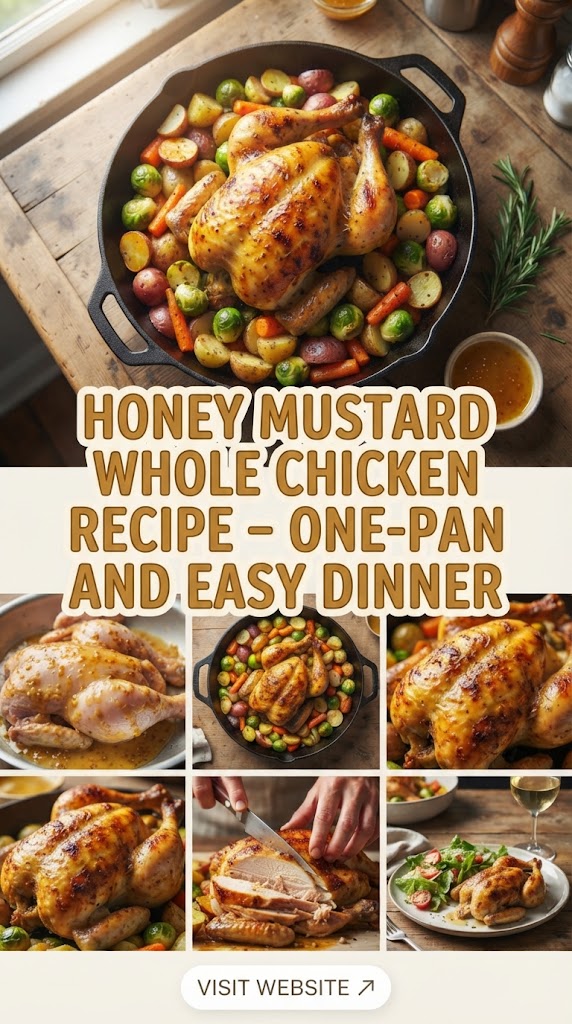
Honey Mustard Whole Chicken Recipe – One-Pan and Easy Dinner
In the world of home cooking, there are few things as comforting, visually stunning, and aromatically pleasing as a whole chicken roasting in the oven. But when you introduce the tangy, sweet, and savory profile of a honey mustard glaze, you elevate a simple Sunday roast into a culinary masterpiece. This Honey Mustard Whole Chicken recipe is designed for the modern home cook: it requires minimal cleanup, relies on pantry staples, and delivers a flavor profile that appeals to toddlers and foodies alike.
Whether you are preparing a cozy family dinner or hosting a small gathering, this one-pan wonder ensures you spend less time hovering over the stove and more time enjoying the company of your loved ones. In this comprehensive guide, we will explore everything from the science of the perfect glaze to the art of the crispy skin, ensuring your roast chicken is succulent every single time.
Why Honey Mustard and Chicken Are a Match Made in Heaven
The pairing of honey and mustard is not just a fast-food dipping sauce tradition; it is a sophisticated balance of flavor profiles that chefs have utilized for centuries. To understand why this recipe works so well, we have to look at the components:
- The Acidity of Mustard: Mustard contains vinegar and mustard seeds, which provide a sharp acidity. This acidity acts as a tenderizer for the chicken meat, breaking down tough fibers and ensuring every bite is juicy.
- The Sweetness of Honey: Honey provides the essential sugar needed for caramelization. As the chicken roasts, the sugars in the honey undergo the Maillard reaction, creating a deep golden-brown crust that is packed with umami.
- The Emulsification: Mustard acts as a natural emulsifier, helping the glaze cling to the chicken skin rather than sliding off into the bottom of the pan.
By combining these two with aromatics like garlic and rosemary, you create a complex flavor profile that hits the sweet, salty, sour, and bitter notes all at once.
Selecting the Best Chicken for Roasting
Before you even preheat your oven, the success of this dish starts at the grocery store or butcher shop.
Size Matters
For a one-pan roast, a chicken weighing between 3.5 to 4.5 pounds is ideal. Anything smaller might dry out before your vegetables are tender, and anything larger might take so long to cook that the honey in the glaze begins to burn.
Air-Chilled vs. Water-Chilled
If your budget allows, look for “air-chilled” chicken. Most commercial chickens are cooled in a water bath, which causes the meat to soak up excess water. When you roast it, that water evaporates, often leading to rubbery skin. Air-chilled chicken has a more concentrated flavor and results in much crispier skin.
Organic and Pasture-Raised
While conventional chicken works perfectly fine for this recipe, organic or pasture-raised birds tend to have a higher fat content in the skin and a deeper flavor in the dark meat, which pairs beautifully with the bold honey mustard glaze.
The Essential Ingredients List
To make this one-pan masterpiece, you will need the following ingredients. Quality matters here, as the ingredient list is relatively short.
- 1 Whole Chicken (approx. 4 lbs): Giblets removed and patted dry.
- 1/2 Cup Dijon Mustard: Dijon offers a sophisticated heat and smooth texture.
- 1/4 Cup Whole Grain Mustard: For texture and pops of mustard seed flavor.
- 1/3 Cup Raw Honey: Use a high-quality clover or wildflower honey.
- 4 Cloves of Garlic: Minced or grated into a paste.
- 2 Tablespoons Olive Oil: To help the skin crisp up.
- 1 Tablespoon Apple Cider Vinegar: To add an extra layer of brightness.
- Fresh Herbs: Rosemary and thyme are the classic choices.
- Kosher Salt and Cracked Black Pepper: Do not be shy with the seasoning.
- The Vegetable Bed: 1 lb of baby potatoes (halved), 3 large carrots (thickly sliced), and 1 large red onion (quartered).
The Preparation: Step-by-Step Instructions
1. Tempering and Drying the Bird
Take your chicken out of the refrigerator at least 30 to 45 minutes before you plan to cook it. Bringing the meat closer to room temperature ensures more even cooking. Use paper towels to pat the chicken extremely dry—inside and out. Moisture is the enemy of crispiness.
2. Preparing the Honey Mustard Glaze
In a medium bowl, whisk together the Dijon mustard, whole grain mustard, honey, minced garlic, olive oil, apple cider vinegar, and chopped fresh herbs. Taste the glaze; it should be a bold balance of sweet and tangy.
3. Seasoning the Cavity
Don’t forget to season the inside of the bird. Sprinkle a generous amount of salt and pepper inside the cavity. You can also toss in a halved lemon or a few sprigs of herbs to infuse the meat from the inside out.
4. Setting the Vegetable Bed
In a large cast-iron skillet or a heavy-duty roasting pan, toss your potatoes, carrots, and onions with a drizzle of olive oil, salt, and pepper. Spread them out to create a “rack” for the chicken to sit on. This prevents the bottom of the chicken from getting soggy and allows the juices to flavor the vegetables.
5. Applying the Glaze
Place the chicken on top of the vegetables. Brush about two-thirds of the honey mustard glaze all over the chicken, making sure to get into the nooks and crannies of the wings and legs. Reserve the remaining third of the glaze for later.
The Roasting Process: Temperature and Timing
The key to a perfect roast chicken is heat management.
- Preheat the oven to 400°F (200°C). A higher temperature is necessary to render the fat and crisp the skin quickly before the breast meat dries out.
- Roasting Time: Generally, a whole chicken needs about 15 minutes per pound. For a 4 lb chicken, expect about 60 to 70 minutes.
- The Basting Stage: About 45 minutes into the roasting, remove the pan from the oven. Brush the remaining honey mustard glaze over the chicken. This creates a thick, tacky, and delicious crust.
- Checking for Doneness: The only foolproof way to know your chicken is done is by using an instant-read meat thermometer. Insert it into the thickest part of the thigh (without hitting the bone). It should read 165°F (74°C).
To Spatchcock or Not?
If you are short on time, consider “spatchcocking” the chicken. This involves removing the backbone with kitchen shears and flattening the bird out.
Pros of Spatchcocking:
- Faster Cooking: Reduces cooking time by about 25-30%.
- Even Cooking: Both the white and dark meat finish at roughly the same time.
- Maximum Crispy Skin: All the skin is exposed to the direct heat of the oven.
If you choose to spatchcock, simply lay the flattened chicken over the vegetables in the same manner as the traditional method.
The Secret to the Crispiest Skin Ever
While the honey mustard glaze provides incredible flavor, the sugar in the honey can sometimes make the skin soft if not handled correctly. Here are three pro tips for maximum crunch:
- The Salt Brine: If you have time, salt the chicken the night before and leave it uncovered in the fridge. This “dry brine” draws out moisture from the skin, leading to a parchment-like crispness.
- Butter Under the Skin: Gently lift the skin over the breast and slide in a few pats of butter mixed with mustard. This fries the skin from the inside out.
- The Convection Setting: If your oven has a convection (fan) setting, use it. The circulating air helps evaporate moisture and browns the honey mustard glaze beautifully.
Choosing the Right Vegetables for a One-Pan Meal
The beauty of a one-pan dinner is that the vegetables cook in the rendered chicken fat (liquid gold) and the dripping honey mustard glaze.
- Root Vegetables: Potatoes, carrots, parsnips, and sweet potatoes are the gold standard. They are hearty enough to withstand the long roasting time.
- Cruciferous Veggies: Brussels sprouts or broccoli florets can be added during the last 20-25 minutes of roasting. If you put them in at the start, they will likely char too much.
- Aromatics: Whole cloves of garlic (skin on), shallots, and leeks add a wonderful depth to the pan juices.
Nutritional Benefits of This Recipe
This Honey Mustard Whole Chicken isn’t just delicious; it’s a powerhouse of nutrition.
- High Protein: A whole chicken provides lean protein from the breast and healthy fats from the thighs and legs.
- Rich in Minerals: Chicken is a great source of selenium, phosphorus, and vitamin B6.
- The Power of Mustard: Mustard seeds contain antioxidants and glucosinolates, which have been studied for their anti-inflammatory properties.
- Honey: While it is a sugar, raw honey contains trace amounts of local pollen and antioxidants.
Side Dish Pairings
While the potatoes and carrots in the pan make it a complete meal, you might want to round out the table with these additions:
- A Bright Green Salad: A simple arugula salad with a lemon vinaigrette cuts through the richness of the honey mustard.
- Garlic Sauteed Kale: The bitterness of kale balances the sweetness of the chicken glaze.
- Crusty Bread: You will want something to mop up the honey mustard juices left in the bottom of the pan. A warm baguette or sourdough is perfect.
Wine and Beverage Pairings
Choosing the right drink can elevate the dining experience.
- White Wine: A buttery Chardonnay or a dry Riesling works best. The acidity in the Riesling mirrors the mustard, while the Chardonnay complements the roasted chicken flavors.
- Red Wine: If you prefer red, go for a light-bodied Pinot Noir. Its red fruit notes and low tannins won’t overpower the honey.
- Craft Beer: A Saison or a Pale Ale has the effervescence and hoppy notes to cleanse the palate between bites of the sweet and savory glaze.
- Non-Alcoholic: A sparkling apple cider or a ginger-infused kombucha offers a refreshing, tangy contrast.
Storing and Using Leftovers
One of the best parts of roasting a whole chicken is the leftovers.
- Storage: Store leftover chicken and vegetables in an airtight container in the refrigerator for up to 3-4 days.
- Reheating: To keep the chicken from drying out, reheat it in the oven at 350°F with a splash of chicken broth, covered with foil.
- Leftover Ideas:
- Honey Mustard Chicken Salad: Shred the cold meat and mix with a little mayo, celery, and extra mustard for a sandwich filler.
- Chicken Tacos: The sweet and tangy flavor works surprisingly well with corn tortillas, avocado, and pickled onions.
- The Carcass: Don’t throw the bones away! Simmer the carcass with some celery and onions to make a rich, honey-infused chicken stock for soups.
Common Mistakes to Avoid
- Using Yellow Mustard: While great for hot dogs, classic yellow mustard lacks the depth and heat required for a sophisticated roast. Stick to Dijon or Spicy Brown.
- Not Using a Thermometer: Visual cues (like clear juices) are unreliable. Use a thermometer to avoid the heartbreak of a dry chicken.
- Crowding the Pan: If your vegetables are piled too high, they will steam instead of roast. Use a large enough pan so everything is in a relatively single layer.
- Glazing Too Early: Because honey has a high sugar content, it can burn. By applying the majority of the glaze in the final 20 minutes, you get a beautiful color without the bitter burnt taste.
Troubleshooting Your Roast
- The skin is browning too fast: If the honey is caramelizing too quickly and the chicken isn’t done, tent the bird loosely with aluminum foil.
- The vegetables are hard but the chicken is done: Remove the chicken to a cutting board to rest and return the vegetables to the oven for another 10-15 minutes.
- The glaze is too thin: If the juices in the pan are too watery, pour them into a small saucepan and simmer on the stove until reduced into a thick honey-mustard gravy.
Variations of the Honey Mustard Glaze
Once you master the base recipe, you can experiment with different flavor profiles:
- Spicy Honey Mustard: Add a teaspoon of cayenne pepper or a tablespoon of Sriracha to the glaze.
- Maple Mustard: Swap the honey for real maple syrup for a woodier, more autumnal flavor.
- Citrus Honey Mustard: Add the zest and juice of an orange to the mixture. This is particularly good during the winter months.
- Herb-Heavy: Increase the amount of rosemary and add sage and oregano for a “Thanksgiving” style roast.
Frequently Asked Questions (FAQs)
Can I use chicken breasts instead of a whole chicken?
Yes, you can use the same glaze for chicken breasts or thighs. However, keep in mind that they cook much faster (usually 20-30 minutes). You should also cut your vegetables smaller so they finish at the same time as the smaller meat pieces.
How do I get the skin extra crispy?
Ensure the chicken is dry before applying oil and salt. Also, roasting at a high temperature (400°F) is crucial for rendering the fat that makes the skin crispy.
Is this recipe gluten-free?
Mustard and honey are naturally gluten-free, but always check the label on your mustard to ensure there are no thickening agents containing wheat.
Can I make this in a slow cooker?
You can, but you will lose the crispy skin. If you use a slow cooker, cook on low for 6 hours. To get a bit of color, you would need to put the chicken under the broiler for 5 minutes after it finishes in the slow cooker.
What is the best honey to use?
For roasting, a standard Clover or Wildflower honey is best. Avoid very expensive, delicate honeys like Manuka for cooking, as the high heat will destroy their unique beneficial properties and subtle flavors.
Conclusion: The Ultimate Weeknight or Weekend Feast
The Honey Mustard Whole Chicken is a testament to the fact that great cooking doesn’t have to be complicated. By utilizing a few high-quality ingredients and the simple technique of one-pan roasting, you can create a meal that looks like it came from a high-end bistro.
The combination of the succulent, honey-glazed meat and the vegetables roasted in schmaltz (chicken fat) creates a harmony of flavors that is difficult to beat. It’s a recipe that invites you to slow down, enjoy the process of preparation, and ultimately share a nourishing, delicious meal with the people who matter most.
So, the next time you see a whole chicken at the market, don’t just reach for the salt and pepper. Reach for the honey and the Dijon, and prepare yourself for a dinner that will undoubtedly become a staple in your household. Happy roasting!