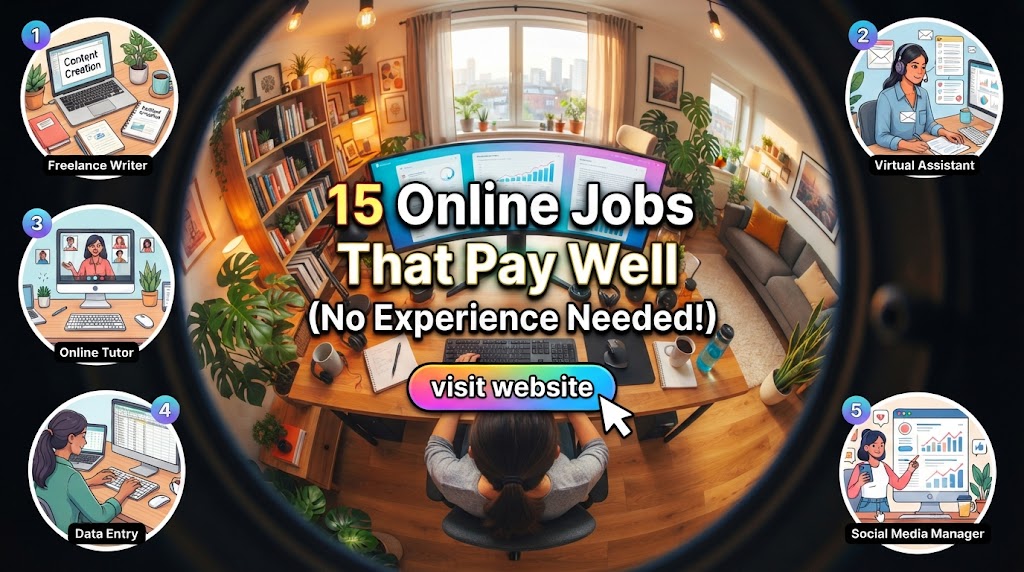
15 Online Jobs That Don’t Require Experience
15 High-Paying Online Jobs That Require Zero Experience in 2024
The traditional 9-to-5 office grind is no longer the only path to financial stability. In fact, for millions of people worldwide, the “office” is now a kitchen table, a cozy corner in a coffee shop, or a sun-drenched balcony overlooking the ocean. The digital economy has matured to a point where “no experience” is no longer a barrier to entry; it is simply a starting point.
Whether you are a stay-at-home parent, a student looking for a side hustle, or someone looking to pivot into a completely new career, the internet is teeming with opportunities. The misconception that you need a computer science degree or a decade of corporate experience to work remotely is officially debunked. Companies today value reliability, communication, and the ability to learn quickly over a fancy resume..
1. Data Entry Clerk: The Foundation of Remote Work
Data entry is often the “gateway drug” to the world of online employment. It is straightforward, requires minimal technical skills, and is always in high demand.
What You’ll Do
As a data entry clerk, your primary responsibility is to input information from one source into a digital database. This might involve transferring handwritten notes into a spreadsheet, updating customer records, or transcribing physical documents into digital formats.
Why It’s Beginner-Friendly
If you can type and have basic knowledge of software like Microsoft Excel or Google Sheets, you are qualified. There is no complex strategy involved—just accuracy and consistency.
- Average Pay: $12 – $22 per hour.
- Where to Find Work: Clickworker, Amazon Mechanical Turk, SigTrack, and DionData Solutions.
- Pro Tip: Your value in data entry is tied to your WPM (words per minute). Use free online tools like TypingTest.com to boost your speed.
2. Virtual Assistant (VA): The Digital Jack-of-All-Trades
A Virtual Assistant is essentially a remote personal assistant. While some VA roles require specialized skills, many entry-level positions focus on administrative tasks that any organized person can handle.
What You’ll Do
Tasks vary wildly depending on the client. You might manage an executive’s email inbox, schedule social media posts, book travel arrangements, or perform basic research.
Why It’s Beginner-Friendly
The most important skills for a VA are organization and communication—things you likely already use in your daily life. Most clients will provide specific instructions or short training videos on how they want their tasks performed.
- Average Pay: $15 – $30 per hour.
- Where to Find Work: Fancy Hands, Belay, Zirtual, and Upwork.
- Pro Tip: Specialize as you go. A “General VA” earns decent money, but a “Pinterest VA” or a “Real Estate VA” can command much higher rates.
3. Social Media Moderator: Keeping the Internet Clean
Have you ever wondered how Facebook groups or large forums stay civil? That’s the work of social media moderators.
What You’ll Do
Your job is to monitor online communities, comments sections, and social media pages. You will enforce community guidelines by deleting spam, banning trolls, and approving or rejecting posts.
Why It’s Beginner-Friendly
If you spend a lot of time on social media, you already understand the “unwritten rules” of the internet. Companies like ModSquad or brands with large followings need people to keep their digital spaces safe around the clock.
- Average Pay: $14 – $20 per hour.
- Where to Find Work: ModSquad, LiveWorld, and Appen.
- Pro Tip: This job is perfect for “night owls” because many companies need moderation during off-peak hours in their home country.
4. Online Transcriber: Turning Speech into Text
If you have a sharp ear and fast fingers, transcription is one of the most flexible online jobs available.
What You’ll Do
You listen to audio or video recordings and type out exactly what is being said. This could be anything from a medical lecture to a legal deposition or a YouTube video script.
Why It’s Beginner-Friendly
Most transcription platforms offer a “pay-per-piece” model, meaning you can take as much or as little work as you want. They usually require a short grammar and typing test to get started, but no formal certification is needed.
- Average Pay: $15 – $25 per audio hour (Note: an “audio hour” takes several hours to type).
- Where to Find Work: Rev, TranscribeMe, Scribie, and GoTranscript.
- Pro Tip: Invest in a good pair of noise-canceling headphones. The clearer you can hear the audio, the faster you will finish the job.
5. Customer Service Representative: The Voice of the Brand
Many major corporations have moved their entire call center operations to remote setups.
What You’ll Do
You handle customer inquiries via phone, email, or live chat. You’ll answer questions about shipping, troubleshoot basic product issues, or process returns.
Why It’s Beginner-Friendly
Companies like Amazon, Apple, and American Express provide extensive paid training. As long as you have a quiet workspace and a friendly demeanor, they will teach you everything else you need to know.
- Average Pay: $13 – $20 per hour.
- Where to Find Work: Arise, TTEC, Working Solutions, and directly through company career pages.
- Pro Tip: Look for “Seasonal” roles during the holidays (October–January). These are incredibly easy to land and often lead to permanent positions.
6. Website and App Tester: Get Paid to Browse
Companies want to know if their websites are user-friendly before they launch them. They pay regular people to “test-drive” their platforms.
What You’ll Do
You will visit a website or use a mobile app while recording your screen and your voice. You’ll be asked to complete a set of tasks—like “Find the checkout button” or “Sign up for the newsletter”—while speaking your thoughts aloud.
Why It’s Beginner-Friendly
They don’t want tech experts; they want “average” users. If you can navigate a website, you can be a tester.
- Average Pay: $10 per 20-minute test.
- Where to Find Work: UserTesting, TryMyUI, Userlytics, and IntelliZoom.
- Pro Tip: Sign up for multiple platforms. Tests are first-come, first-served, so having several dashboards open increases your chances of snagging a task.
7. Search Engine Evaluator: Improving AI and Algorithms
Even the most advanced AI needs a human touch to ensure results are accurate and relevant.
What You’ll Do
Search engines like Google and Bing provide you with a search term and a set of results. You then rate those results based on how helpful or accurate they are.
Why It’s Beginner-Friendly
There is no “right” answer in the traditional sense; companies are looking for human intuition. They provide detailed guidelines on how to rate the results, and you work on your own schedule.
- Average Pay: $14 – $19 per hour.
- Where to Find Work: Appen, Telus International (formerly Lionbridge).
- Pro Tip: This work is often project-based. Be patient during the application process, as it can take a few weeks to get onboarded.
8. Online English Tutor (Conversational): No Degree Required
While some tutoring jobs require a teaching degree, many platforms focus on “conversational English.”
What You’ll Do
You chat with people from around the world who want to practice their English skills. There are no lesson plans or grading; you simply talk about daily life, hobbies, or news.
Why It’s Beginner-Friendly
If you are a native English speaker, you are already an expert. Platforms like Cambly allow you to log on whenever you have spare time and start chatting with students.
- Average Pay: $10 – $15 per hour.
- Where to Find Work: Cambly, NiceTalk, and PalFish.
- Pro Tip: Having a bright, friendly background and good lighting makes a huge difference in your “tutor rating,” which leads to more students.
9. Micro-Tasker: Small Tasks, Real Money
Micro-tasking involves doing tiny digital chores that computers still struggle with.
What You’ll Do
This could include identifying objects in a photo (to help train self-driving cars), labeling sentiment in a tweet, or verifying if two addresses are the same.
Why It’s Beginner-Friendly
Tasks can take anywhere from 5 seconds to 5 minutes. It’s the ultimate “low-pressure” job. You can do it while watching TV or during your lunch break.
- Average Pay: Varies (Earnings are based on volume; fast workers can make $10-$15/hour).
- Where to Find Work: Amazon Mechanical Turk (mTurk), Clickworker, and Microworkers.
- Pro Tip: On mTurk, use browser extensions like “MTurk Suite” to find the highest-paying tasks and avoid “requesters” who have a history of rejecting work.
10. Proofreader: For the Grammar Enthusiast
If you find yourself mentally correcting the typos on a restaurant menu, you have the potential to be a professional proofreader.
What You’ll Do
You review blog posts, eBooks, or student essays to check for spelling, punctuation, and grammatical errors. Unlike editing, proofreading is the final “polish” before publication.
Why It’s Beginner-Friendly
You don’t need a journalism degree. If you have a strong grasp of the English language and an eye for detail, you can start with small gigs on freelance marketplaces.
- Average Pay: $15 – $35 per hour.
- Where to Find Work: Fiverr, Upwork, and ProofreadingServices.com.
- Pro Tip: Use tools like Grammarly or Hemingway as a “first pass” to catch obvious errors, then do your manual check to catch the nuance.
11. Content Writer (Entry-Level): Getting Paid to Tell Stories
The internet is fueled by content. Every blog, product description, and news article was written by someone—and many of those people started with zero experience.
What You’ll Do
You’ll write short articles (500–1,000 words) on topics ranging from “How to wash a cat” to “The best credit cards for students.”
Why It’s Beginner-Friendly
“Content Mills” are websites that hire almost anyone who can pass a basic writing test. While the pay starts low, it allows you to build a portfolio that you can use to land high-paying clients later.
- Average Pay: $0.03 – $0.07 per word (starting out).
- Where to Find Work: Textbroker, iWriter, and Verblio.
- Pro Tip: Don’t stay at content mills too long. Use them to learn the ropes, then move to LinkedIn or ProBlogger to find “direct” clients who pay 10x more.
12. Stock Photo Contributor: Turn Your Smartphone into a Camera
You don’t need a $5,000 DSLR camera to sell photos online. Modern smartphones are more than capable of producing high-quality stock imagery.
What You’ll Do
You take photos of everyday objects, landscapes, or “lifestyle” scenes (like a cup of coffee next to a laptop) and upload them to stock agencies. When someone downloads your photo, you earn a royalty.
Why It’s Beginner-Friendly
It is entirely passive. Once you upload the photo, it can sell thousands of times over several years without you doing any extra work.
- Average Pay: $0.25 – $2.00 per download (varies by platform).
- Where to Find Work: Shutterstock, Adobe Stock, and Foap.
- Pro Tip: Research “trending keywords.” If you take photos of things people are actually searching for (like “sustainable energy” or “remote team meeting”), you’ll sell much faster.
13. Virtual Bookkeeper: Helping Small Businesses Stay Organized
Wait! Before you skip this because you “aren’t a math person,” know that bookkeeping is mostly about organization, not complex calculus.
What You’ll Do
You record financial transactions, categorize expenses (e.g., “This was a travel expense,” “This was office supplies”), and reconcile bank statements using software like QuickBooks.
Why It’s Beginner-Friendly
While it sounds technical, many small business owners just need someone to keep their receipts organized. You can take a free course on QuickBooks University and be ready to take clients in a week.
- Average Pay: $20 – $40 per hour.
- Where to Find Work: Belay, LinkedIn, and local small business groups.
- Pro Tip: Small businesses are often intimidated by their own finances. If you can provide a sense of order and calm, they will stay with you for years.
14. E-commerce Product Description Writer
With the explosion of Shopify and Amazon FBA stores, there is an endless need for people to write descriptions for the products being sold.
What You’ll Do
You write a few catchy, persuasive paragraphs explaining what a product is and why someone should buy it.
Why It’s Beginner-Friendly
The format is usually very repetitive. Once you learn the “formula” for a good product description (Hook -> Features -> Benefits -> Call to Action), you can churn them out very quickly.
- Average Pay: $5 – $20 per description.
- Where to Find Work: Fiverr, Upwork, and eCommerce forums.
- Pro Tip: Learn basic SEO (Search Engine Optimization). If you can tell a client that your descriptions will help their product show up on Google, you can charge double.
15. Voiceover Artist (Entry-Level)
Do you have a voice that people often compliment? You can get paid to read scripts from home.
What You’ll Do
You record your voice for audiobooks, “explainer” videos on YouTube, or radio commercials.
Why It’s Beginner-Friendly
In the beginning, you don’t need a professional studio. A quiet closet with some blankets for soundproofing and a $50 USB microphone is enough to get started on “beginner” platforms.
- Average Pay: $20 – $100 per gig.
- Where to Find Work: ACX (for audiobooks), Voices.com, and Fiverr.
- Pro Tip: Practice your “commercial voice” by reading the back of cereal boxes or magazine ads aloud. Focus on pacing and clarity.
How to Avoid Scams and Land Your First Job
The world of online work is exciting, but it also has its share of predators. To ensure your journey is successful and safe, follow these golden rules:
1. Never Pay to Work
A legitimate employer will never ask you to pay for your own training, a “startup kit,” or a background check. If they ask for money upfront, it is a scam.
2. Research the Company
Before applying, check the company on Glassdoor, the Better Business Bureau (BBB), or even Reddit. See what other remote workers are saying about their experiences.
3. Professionalism is Your Secret Weapon
Since you don’t have experience, your “professionalism” is what will get you hired. This means:
- Responding to emails within a few hours.
- Having a resume that is free of typos.
- Being on time for Zoom interviews.
- Following instructions to the letter.
4. Create a Dedicated Workspace
Even if it’s just a specific corner of your dining table, having a “work zone” helps your brain switch into professional mode. It also ensures you have a neutral background for video calls.
5. Master the “Soft Skills”
In the remote world, “Soft Skills” are more important than “Hard Skills.” Employers are looking for:
- Self-Motivation: Can you work without a boss hovering over your shoulder?
- Communication: Can you explain things clearly over Slack or Email?
- Time Management: Can you hit a deadline without being reminded?
The Path Forward: From Beginner to Pro
The most important step you can take is the first one. Don’t fall into the trap of “over-researching.” Pick one or two jobs from this list that resonate with you and apply to three platforms today.
The “No Experience” phase is temporary. Within three to six months of doing data entry or virtual assistant work, you will have a resume filled with digital skills. You’ll understand how remote teams operate, you’ll be proficient in tools like Slack, Trello, and Zoom, and you’ll have the confidence to apply for higher-paying, more specialized roles.
The digital economy is a meritocracy. It doesn’t care where you went to school or what you did five years ago. It only cares about the value you can provide today. So, dust off your laptop, sharpen your typing skills, and claim your piece of the online world. Your commute-free life is waiting.