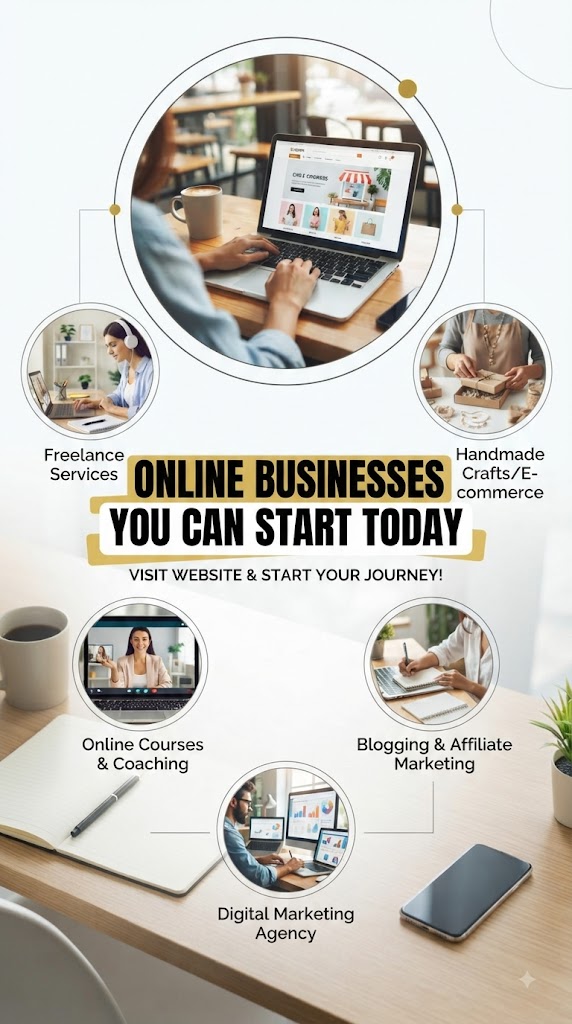
Online Businesses You Can Start Today
The Digital Gold Rush: 20+ High-Profit Online Businesses You Can Launch Today
The barrier to entry for starting a business has never been lower. In the 1990s, starting a business required a physical storefront, massive inventory, and a bank loan that could take decades to pay off. Today, all you need is a laptop, a stable internet connection, and the audacity to begin.
We are living in the “Creator Economy” and the “Knowledge Age,” where attention and information are the new global currencies. Whether you are looking to escape the 9-to-5 grind, build a side hustle for extra security, or create a scalable empire, the internet offers a playground of opportunities.
This guide explores the most viable, profitable, and sustainable online businesses you can start today. We won’t just list them; we will dive into the how, the why, and the roadmap to making your first dollar online.
Part 1: The Service-Based Economy (Trading Skill for Scale)
Service-based businesses are the fastest way to generate cash flow because they require zero inventory. You are selling your brainpower and your time.
1. Freelance Copywriting
Copywriting is the art of “closing in print.” It is arguably the most valuable skill in the digital world. Every website, email, Facebook ad, and product description was written by someone.
- Why it works: Businesses are desperate for words that convert visitors into buyers.
- How to start: Build a portfolio on platforms like Medium or a personal blog. Start pitching to small e-commerce brands or tech startups.
- Income Potential: Beginners can earn $25–$50/hour; experts often charge $10,000+ per project or take a percentage of the revenue generated by their copy.
2. High-Ticket Sales Closing
Many online influencers and course creators sell products ranging from $2,000 to $20,000. They don’t have the time to get on the phone with every lead. That’s where a remote closer comes in.
- The Model: You handle the “discovery calls” for established businesses and take a commission (usually 10-15%) on every deal you close.
- The Perk: You don’t need to generate leads or handle customer service. You just show up and close.
3. Virtual Assistant (VA) for Content Creators
Top-tier YouTubers and podcasters are drowning in administrative tasks. They need help managing schedules, responding to emails, and coordinating sponsorships.
- Niche Down: Don’t just be a “general VA.” Become a “Podcast Manager” or a “YouTube Growth Assistant.”
- Tools to Master: Notion, Slack, Trello, and basic video editing tools.
4. Specialized SEO Consulting
Search Engine Optimization (SEO) is not dead; it’s evolving. Businesses need to appear on the first page of Google to survive.
- The Strategy: Focus on “Local SEO” for plumbers, lawyers, or dentists. These businesses have high margins and are often willing to pay $1,000+/month for a consultant who can bring them more leads.
Part 2: The Content & Media Powerhouse
In 2024, attention is the most valuable commodity. If you can build an audience, you can build a business.
5. The Niche Newsletter (The Substack Model)
Newsletters are experiencing a massive renaissance. Platforms like Substack and Beehiiv allow writers to charge a monthly subscription fee for premium content.
- The Strategy: Pick a boring but profitable niche (e.g., “The Future of Sustainable Logistics” or “AI in Real Estate”).
- Monetization: Once you hit 1,000 subscribers, you can charge for “Premium Tiers” or sell high-value sponsorships.
6. Faceless YouTube Channels
You don’t need to be a celebrity to make money on YouTube. Many successful channels use stock footage, AI voiceovers (like ElevenLabs), and tight scripts to educate or entertain.
- Popular Niches: Finance, History, True Crime, and “Top 10” lists.
- Revenue Streams: AdSense, affiliate marketing, and selling digital products related to your niche.
7. Podcast Production & Repurposing
Everyone has a podcast, but very few people know how to edit them or turn them into “Shorts” for TikTok and Instagram.
- The Business: Offer a package where you take one long-form podcast and turn it into 10 viral clips, 3 blog posts, and a newsletter. This is a high-demand service for busy executives and creators.
Part 3: E-commerce 2.0 (Low Risk, High Reward)
Gone are the days of filling your garage with boxes. Modern e-commerce is about lean operations.
8. Print on Demand (POD)
Unlike traditional clothing brands, Print on Demand means the product is only created when a customer buys it.
- How it works: You design a t-shirt, mug, or poster. You list it on your site (integrated with Printful or Printify). When a sale happens, the provider prints and ships it.
- Success Secret: Focus on “hyper-niches.” Don’t just make “dog shirts.” Make “shirts for left-handed owners of Senior Golden Retrievers.”
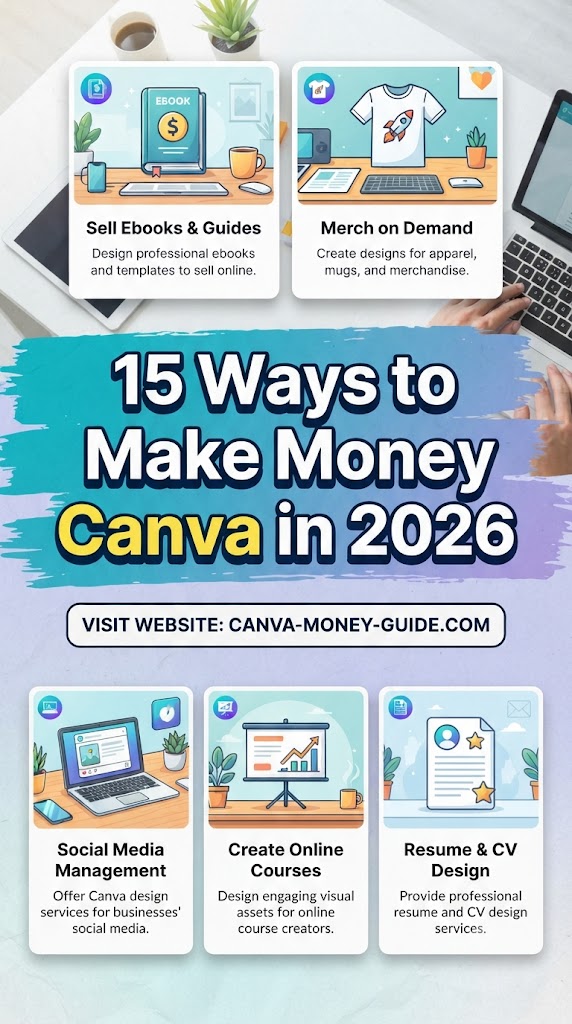
9. Digital Product Empire
Selling PDFs, templates, and spreadsheets is the ultimate passive income. There is no shipping, no inventory, and 95% profit margins.
- Examples: Excel templates for budgeting, Canva templates for social media, or Notion setups for productivity.
- Where to sell: Etsy, Gumroad, or your own Shopify store.
10. Curated Dropshipping (The “High Ticket” Approach)
Forget $5 plastic trinkets from China. Modern dropshipping focuses on high-ticket items like luxury saunas, high-end furniture, or professional kitchen equipment.
- The Difference: You partner with domestic suppliers to ensure fast shipping and high quality. You act as the premium digital storefront for their products.
Part 4: The Knowledge Economy (Sell What You Know)
If you have solved a problem in your life or career, others will pay you to show them the shortcut.
11. Cohort-Based Courses (CBCs)
Recorded courses have low completion rates. Cohort-based courses (live, community-driven learning) are the future.
- The Value: People pay for transformation and accountability, not just information.
- Pricing: While a recorded course might sell for $50, a live cohort can easily command $500 to $2,000 per student.
12. “Productized” Consulting
Standard consulting is hard to scale because every client wants something different. Productized consulting means you offer one specific solution for one specific price.
- Example: “I will set up your company’s CRM in 48 hours for a flat fee of $2,500.”
- Why it works: It’s easy to sell, easy to fulfill, and allows you to build a repeatable system.
13. Paid Membership Communities
Platforms like Skool and Circle allow you to build a “private club” where members pay a monthly fee to access your expertise and a community of like-minded people.
- The Math: 100 members paying $50/month = $5,000/month in recurring, predictable revenue.
Part 5: Tech-Forward & AI-Driven Businesses
Artificial Intelligence is the “Great Leveler.” It allows a single individual to do the work of a 10-person agency.
14. AI Automation Agency (AAA)
This is the newest frontier. Businesses know AI is important, but they don’t know how to use it.
- The Service: You build custom AI chatbots for customer service or automate repetitive data entry using Zapier and OpenAI for small businesses.
- The Pitch: “I will save your employees 20 hours a week by automating your lead follow-up.”
15. SaaS (Software as a Service) – The “No-Code” Way
You no longer need to be a coder to build software. Tools like Bubble, Adalo, and Glide allow you to build apps using drag-and-drop interfaces.
- The Strategy: Find a very specific “micro-problem.” For example, a specialized booking app for mobile pet groomers.
Step-by-Step: How to Launch Your Online Business in 30 Days
The biggest mistake aspiring entrepreneurs make is spending six months “planning.” Here is the accelerated roadmap:
Phase 1: The Selection (Days 1-7)
- Identify your “Zone of Genius”: What do people often ask you for help with?
- Market Research: Go to Reddit, Quora, and Amazon reviews. What are people complaining about? Your business should be the solution to that complaint.
- The 24-Hour Rule: Pick one idea and stick to it for at least 6 months. Do not “shiny object” jump.
Phase 2: The Minimum Viable Offer (Days 8-14)
- Create a landing page: Use Carrd, Framer, or Shopify.
- Write your offer: “I help [Target Audience] achieve [Desired Result] through [Your Method] without [Common Pain Point].”
- Set up payment: Stripe or PayPal. Do not worry about a complex legal structure until you make your first $1,000.
Phase 3: The Traffic Engine (Days 15-30)
- Organic Content: Post 3 times a day on the platform where your audience hangs out (LinkedIn for B2B, TikTok/Instagram for B2C).
- Direct Outreach: Send 20 personalized DMs or emails per day to potential clients.
- The “Beta” Launch: Offer your service for a discount (or free) to the first 3 people in exchange for a glowing video testimonial.
The 3 Pillars of a Successful Online Business
Regardless of which model you choose, every successful online business rests on three pillars:
1. Traffic (Attention)
Without eyes on your offer, you have no business. You must choose one “Master Channel” (SEO, Social Media, or Paid Ads) and dominate it.
2. Conversion (The Mechanism)
This is how you turn a stranger into a customer. It could be a sales page, a webinar, or a 15-minute Zoom call. You must master the psychology of persuasion.
3. Retention (The Lifetime Value)
It is 10x cheaper to keep an existing customer than to find a new one. Focus on delivering “overwhelming value” so your customers become your best marketing department.
Overcoming the “First Year” Hurdles
Most online businesses fail not because the idea was bad, but because the founder quit during the “Trough of Disillusionment.”
- The Ghost Town Phase: You will post content, and no one will like it. You will send emails, and no one will reply. This is the test. Keep going.
- The Complexity Trap: You don’t need a fancy logo, a 50-page business plan, or expensive software. You need a way to help people and a way to get paid.
- The Comparison Trap: Don’t compare your Day 1 to someone else’s Day 1,000. Focus on being 1% better every day.
Conclusion: The Best Time to Start is Yesterday
The internet does not care about your age, your location, or your formal education. It only cares about the value you can provide to someone else.
The digital economy is not a zero-sum game. There is room for everyone because the “niche-ification” of the world allows you to be the #1 expert in a very specific, profitable corner of the web.
Your Action Step for Today: Choose one business model from this list that aligns with your skills and interests. Don’t buy a domain name yet. Don’t build a logo. Simply go to LinkedIn or Twitter and write one post explaining how you can help someone solve a specific problem.
The “Online Business” dream is real, but it requires the work of a real business. Stop consuming and start creating. The world is waiting for what you have to build.